
Troubleshooting Exterior Plaster Surfaces
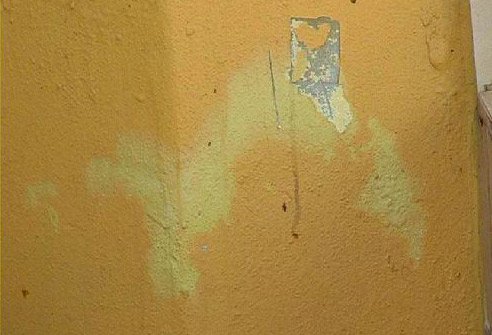
Alkali Attack
Description
Discoloration of coating in patches generally associated with bright orange, yellow, red and sometimes blue and green colours tinted with organic colourants. This normally occurs on fresh or patched up plastered walls. The patches can be both in shaded and UV exposed areas.
Read More
Possible diagnosis
- Alkali attack of the coating pigments through increased concentrations of calcium hydroxide salts from cement.
- Possibly due to painting when plaster is still damp (moisture content exceeding 18%).
- Moisture ingress from hairline cracks which result in calcium hydroxide salts seeping out and conglomerating.
- The lack of a suitable alkali-resistant primer.
- Excessive continuous contact with moisture. Areas most affected are those near to parapet walls, horizontal landings, ground level and cracks.
Remedy
- Remove or seal the source of moisture ingress if this was the cause.
- Apply a quality masonry primer such as NEO Acrylic Wall Primer after the wall has dried sufficiently.
- Recoat with a good quality exterior acrylic paint such as NEO Teflacryl, Neo Dur (SABS Grade 1) or NEO Multi Dur (SABS Grade 2) and NEO Aurora (SABS Grade 3).
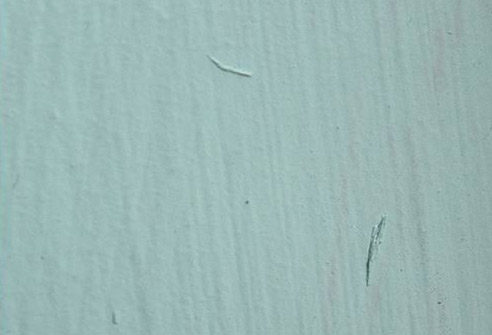
Bittiness / Foreign Particles
Description
Particles in the paint film.
Read More
Possible diagnosis
- Poor quality paint brush or roller equipment losing bristles and fibers.
- Worn paint brush or roller equipment requiring replacement.
- Using incorrect synthetic paint brushes or rollers with solvent-based paints.
- Painting in dusty conditions.
- Poor quality paint taking excessive time to dry.
- Flocculated material, skin, gel or foreign particles in paint container.
Remedy
- Sand back to smooth surface and recoat avoiding the above pitfalls.
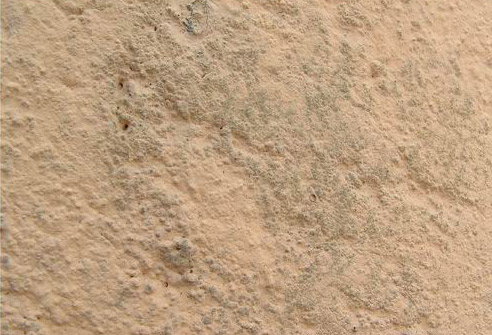
Black Mould Fungal or Algae Contamination
Description
Black, grey or brown areas of fungus growth on the surface of the coating. Can also include red, yellow and green algae.
Read More
Possible diagnosis
- Damp areas receiving little or no sunlight are susceptible to mold.
- Painting over an area that has had mold.
- Low-quality paint containing no or low levels of in-can biocides.
- Re-using opened containers that have received contamination from application transfer and/or storage conditions.
Remedy
- Determine if the contaminant is dirt or mildew by applying a few drops of household bleach, if the discoloured areas disappear, it is most likely mold.
- Remove the source of moisture by sealing the leak source or ventilation.
- Apply biocide/sterilizer e.g. NEO Fungi Wash. Then scrub and rinse thoroughly.
- Recoat with paint that is protected with dry film biocide.
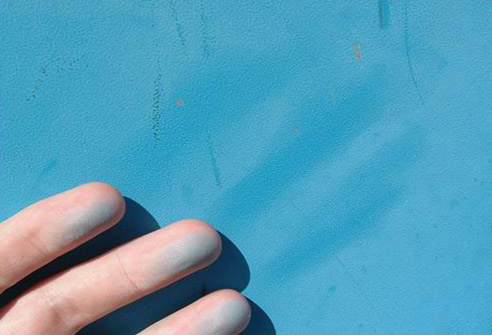
Chalking
Description
The formation of powder on the surface of a weathered coating. The powders usually consist of broken down binder and freed pigment particles due to UV, temperature and moisture exposure.
Read More
Possible diagnosis
- Using interior quality paint for outdoors use.
- Using a low-grade paint comprising of a low binder and high pigment loading.
- Most medium quality paints are in the 65-75% PVC (Pigment Volume Concentration) and may chalk within 4 years.
Remedy
- Remove the friable chalk by scrubbing with a stiff nylon brush and rinse with water. Check for any remaining chalk after the surface has thoroughly dried. Repeat the cleaning process if the powder is still present.
- If chalk persists, recoat with NEO Alkali Resistant Primer or NEO Bonding Liquid and recoat with NEO Aurora, NEO Dur (SABS Grade 1), NEO Multi Dur (SABS Grade 2) or NEO Aurora (SABS Grade 3).
Blistering / Bagging
Description
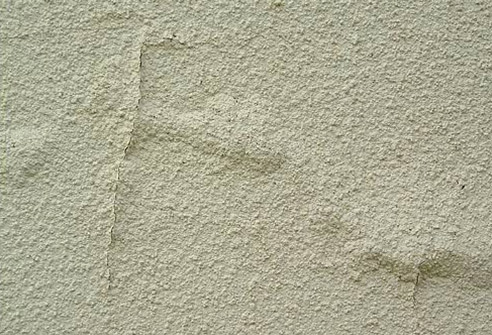
Bag-shaped blisters ranging from 0.5cm to 1m in diameter.
Blisters can be intact or perished and flaking. If not dried out the blisters can be found to be filled with water/liquid.
Read More
Possible diagnosis
- Excessive moisture ingress at the back of paint film.
- Painting to soon before the masonry structure has dried.
- Water-based paint exposed to rain, high humidity or dew shortly after the coating has dried.
- Poor structural design aspect related to moisture barriers.
Remedy
- Remove all loose and flaking paint.
- Establish cause of moisture ingress and rectify.
- Allow structure to dry out before repainting.
- If moisture source cannot be removed, an ultra-high PVC topcoat paint such as NEO Contractors PVA may have to be used.
Chalking
Description
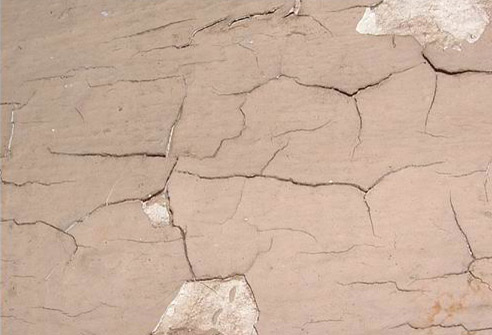
Largely sized cracking and simultaneous flaking of multiple layers of coatings. The presence of a friable powdery surface under the flaking paint.
Read More
Possible diagnosis
- Multiple layers of paint, possibly painted on previously chalking paint or gypsum type plaster.
- The multiple layers of coatings contribute to the increased surface tension of the whole system resulting in the breakaway of the subsequent layers from the weaker or most friable layer.
- Thick coatings subject to extreme temperature changes and subsequent expansion and contraction forces.
Remedy
- Remove all loose and flaking paint.
- Remove the friable chalk by scrubbing with a stiff nylon brush and rinse with water. High-pressure equipment can also be used. Check for any remaining chalk after the surface had thoroughly dried. Repeat the cleaning process if the powder is still present.
- If chalk persists, apply one coat of NEO Bonding Liquid and recoat with appropriate quality top coat such as NEO Dur (SABS Grade 1), NEO Multi Dur (Grade 2) or NEO Aurora (SABS Grade 3).
Crazing Plaster Cracks
Description
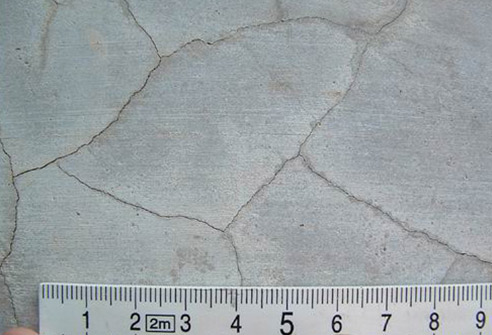
Crazing is a network of fine cracks, usually in a hexagonal pattern, which measures between 5 and 75 mm across each hexagon. They are usually very fine and shallow and do not extend through the whole depth of the plaster and are thus classed as non- structural cracks. ISO/SABS define a hairline crack as one with a width of 0.5mm or less. Cracks larger than 0.5mm are usually a true substrate crack. Generally, craze cracks are stable and do not open and close with time.
Read More
Possible diagnosis
- Crazing is usually the result of over trowelling a rich mix (high cement content) or using sand containing an excessive amount of dust.
- Plaster that is allowed to dry too quickly due to sun, wind, absorbent brickwork and or badly graded sand.
- Plaster applied in layers that are too thick.
Remedy
- Most of NEO Paints sheens and medium build texture coatings e.g. NEO Marble Plaster can cover hairline cracks.
Colour Difference Related to Texture
Description
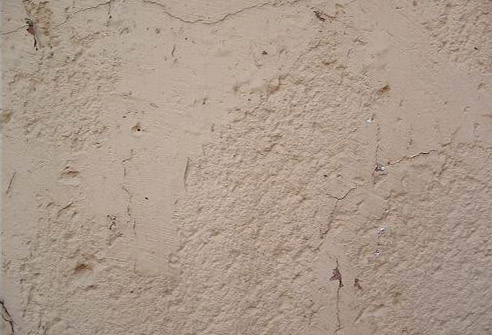
Perceived colour difference related to plaster texture difference.
Read More
Possible diagnosis
- Smoothly plastered and rough plastered surfaces will result in perceived colour differences related to more or less light scattering.
- Different surface textures could indicate different levels of porosity in substrate causing premature moisture loss during curing resulting in poor film properties.
- Rough surfaces will also tend to collect and retain dirt more than smooth.
Remedy
- Remove indifferent plastered surfaces and finish substrate with the same consistency in texture and materials.
- NEO Paints textured coatings such as NEO Marble Plaster are ideal for this purpose.
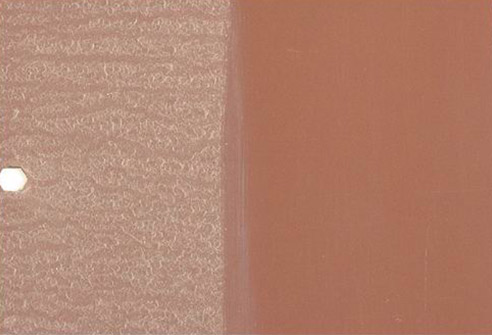
Dirt Pickup and Dirt Retention
Description
Dirt pickup describes the degree to which dirt, dust, and other contaminants adhering to a substrate and the degree to which dirt remains on the substrate after cleaning.
Read More
Possible diagnosis
- Low-quality paints, especially some matt paints, are more coarse and porous and thus more susceptible to dirt pick up and retention.
- Sheen paints with considerable flexibility could also trap dirt during expansion and contraction.
- Continuous contact with contaminants like soil and air pollution.
Remedy
- Remove dirt by washing and rinsing.
- Recoat with a good quality medium to high sheen paint such as NEO Teflacryl or NEO Dur (SABS Grade 1), NEO Multi Dur (SABS Grade 2), NEO Aurora (SABS Grade 3).
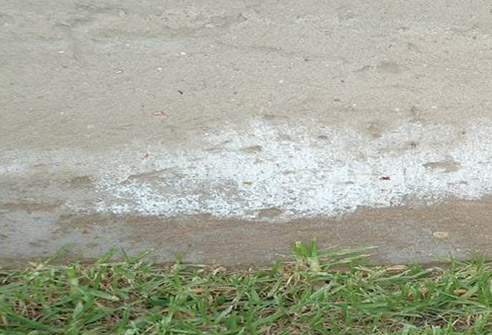
Efflorescence
Description
The formation of random white powdery salts on the surface which are generally more visible on darker coloured surfaces.
These salts are present in the sand used to make bricks and plaster. If moisture is present, the salts get washed to the surface and the paint film.
Read More
Possible diagnosis
- Failure to remove efflorescence before painting.
- Excessive continuous contact with moisture -areas most affected include parapet walls and horizontal landings or areas near ground levels and cracks.
Remedy
- Remove or seal the source of moisture ingress if this was the cause. Note: This is best done in dry seasons.
- Remove efflorescence by brushing and power washing with copious amounts of water. Allow substrate to dry out for 2-3 weeks. If salts return the washing procedure should be repeated. Apply 2 coats NEO Salt Stop as per instructions.
- Apply a quality solvent or water based masonry primer such as NEO Acrylic Wall Primer after the wall has dried out sufficiently.
- Recoat with a good quality exterior acrylic paint i.e. NEO Teflacryl, NEO Dur (SABS Grade 1), NEO Multi Dur (SABS Grade 2) and NEO Aurora (SABS Grade 3).
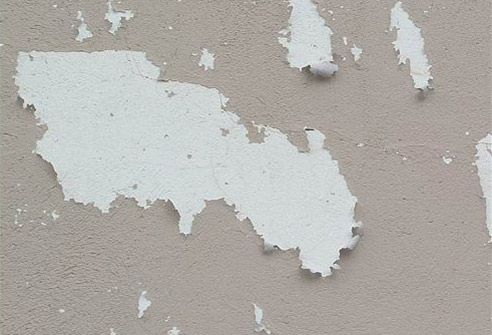
Flaking
Description
Top coat flaking with the presence of a friable powdery undercoat.
Read More
Possible diagnosis
- Painting on powdery substrate such as old chalking paint, skim plasters, gypsum etc.
Remedy
- Remove all loose and flaking paint.
- Remove friable residue from substrate or use suitable bonding agent or plaster primers such as NEO Bonding Liquid or NEO Acrylic Wall Primer. Apply a coating such as NEO Teflacryl, NEO Dur (SABS Grade 1), NEO Multi Dur ( SABS Grade 2) or NEO Aurora (SABS Grade 3).
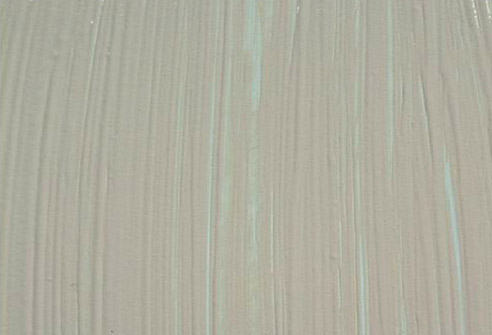
Efflorescence
Description
Skipped or missing areas, left uncoated with paint.
Read More
Possible diagnosis
- Paint with poor flow and leveling properties.
- Not enough paint loaded onto the brush
- Dragging over partially dried film.
- Poor application equipment ie. brush with uneven nip
Remedy
- Repaint affected areas. Repainting from surface edge to edge.
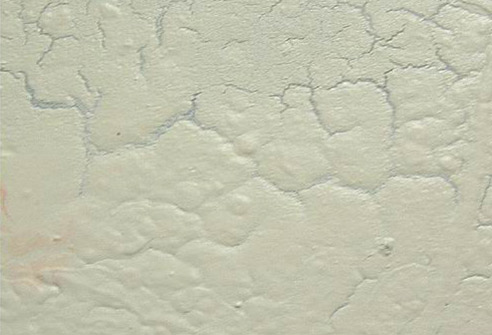
Mud or Star Cracking
Description
Star or mud type crack patterns in the paint film. The top of the film dries faster than the internal bottom layer and the difference in tension results in cracks.
Read More
Possible diagnosis
- Water-based paints applied to hot substrates.
- Water-based paint drying under extremely hot conditions.
Remedy
- Sand down and recoat in thinner layers at more moderate temperatures.
- Allow longer drying times between coats.
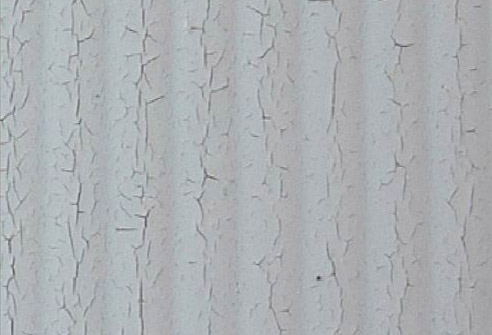
Mud or Star Cracking at Low Temperature
Description
Micro mud-type crack patterns combined with poor adhesion and film integrity associated with the application during low temperatures.
Read More
Possible diagnosis
- Water-based paints applied to extremely cold substrates.
- Water-based paint applied during extremely low-temperature conditions.
- Most polymer resin systems require a temperature above 10-15ºC to coalesce into a coherent layer.
Remedy
- Remove loose and cracked paint.
- Apply NEO Bonding Liquid and overcoat with water-based paint, such as NEO Teflacryl or NEO Dur (SABS Grade 1), NEO Multi Dur (SABS Grade 2), NEO Aurora (SABS Grade 3).
- Ensure that all painting is done at temperatures above 10 or 15 ºC and that the temperature remains more or less constant for ±2 hours after application.
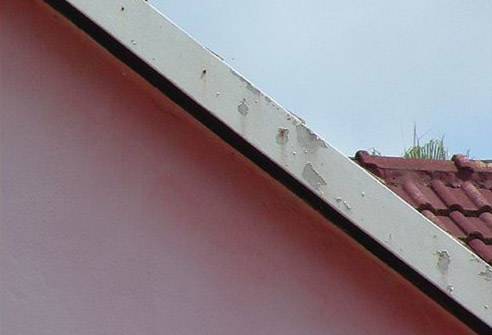
Pigment Fading
Description
Premature colour change related to UV exposure which has resulted in the breakdown of pigment particles. Normally occurs in areas which receive the most direct sunlight and are uniform. Fading should not be confused with chalking which can sometimes occur simultaneously. If the friable top layer is wiped away and the colour is restored it is in all likelihood not pigment fading but chalking.
Read More
Possible diagnosis
- Using an interior latex binder and or colour pigment selection for exterior use.
- Not all pigment colours have the same degree of UV fastness, especially some bright yellows and red.
Remedy
- Recoat with an exterior coating such as NEO Teflacryl or NEO Dur (SABS Grade 1).
- The chances are good that if low-cost interior pigments were used, the binder system could also be of lower quality, so assess if chalking has occurred and treat appropriately.
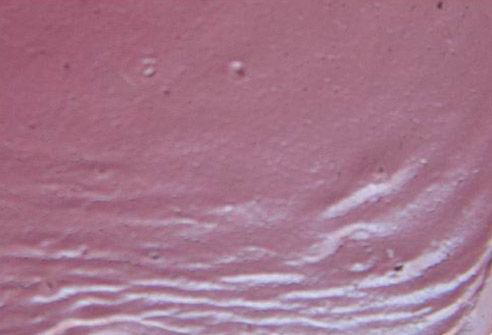
Poor Flow and Leveling
Description
A coating that dries to an uneven surface profile, which can include brush and roller striations.
Read More
Possible diagnosis
- Incorrect roller cover or poor quality brush.
- Coating too thickly applied due to roller/ brush overloading.
- Rebrushing or rolling of partially dried paint.
- The use of low-quality paint with poor flow and leveling properties
Remedy
- Dried paint needs to be sanded level and repainted.
- Make use of a top quality acrylic paint with good flow and leveling properties such as NEO Teflacryl, NEO Dur (SABS Grade 1), NEO Multi Dur (SABS Grade 2) or NEO Aurora (SABS Grade 3).
- Make use of a roller with the correct roller cover and good quality brushes.
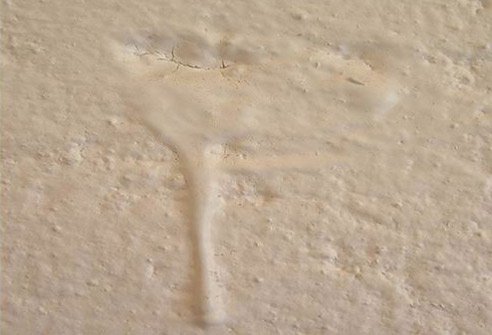
Sags, Drips, Tears, Curtains and Runs
Description
Downward movement of a paint film during application and setting, resulting in an uneven film having a thicker lower edge. In this example holes in rough scratch plaster trap more paint and result in runs.
Read More
Possible diagnosis
- Too thickly applied coat due to incorrect roller cover or technique.
- Paint with poor flow properties.
- Incorrectly thinned paint.
- Painting in too cold or humid conditions.
- Spraying too close to the surface.
Remedy
- If still wet, brush or roll out to level.
- Dried paint needs to be sanded down a level and repainted. Make sure that the paint and application technique match the original.
- Do not paint in excessively cold or humid conditions.
- Do not overload brush or roller with paint.
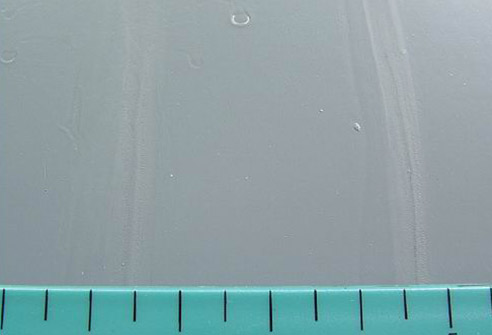
Snail Trail
Description
Vertical shiny, sometimes sticky streaks in predominantly matt coatings. Streaks generally start to emanate from flat top walls or parapet (low protective walls along the edge of a roof, bridge, or balcony) walls. Streaks are generally randomly spaced and follow gravitational direction. Not to be confused with dirt streaks.
Read More
Possible diagnosis
- Rain has impinged on the paint film that has not fully dried/coalesced.
- This could have occurred within the first 2 – 24 hours (in coastal regions) depending on the humidity and dampness experienced during the time of painting. The water has subsequently washed away water soluble paint components.
Remedy
- Do not paint under adverse weather conditions.
- Normally the trails weather away within the first 3-6 months or are washed from the film after 2-3 rains.
- Alternatively recoat, taking care to consider touch-up batch variation and difference in application technique.
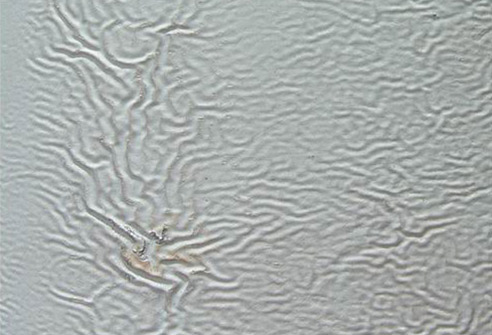
Wrinkling (Part 1)
Description
The development of wrinkles in a film surface during drying, usually due to the formation of a surface skin while the underlying layer takes longer to cure and is still soft.
Read More
Possible diagnosis
- Too thickly applied oil/alkyd based paint.
- Incorrectly formulated oil/alkyd based paint with too much surface drier ingredients.
- Too thickly applied water-based paint which has dried too quickly due to exposure to excessive temperature or force drying. Water-based paints with higher sheen levels are more prone.
Remedy
- If the coating is still slightly wet, remove with NEO Paint Remover and recoat in a thin, even layer under the correct temperature. Make sure that it was a thickness problem and not a formulation problem.
- If the wrinkled coating had fully dried it can be sanded down and recoated in the correct manner.
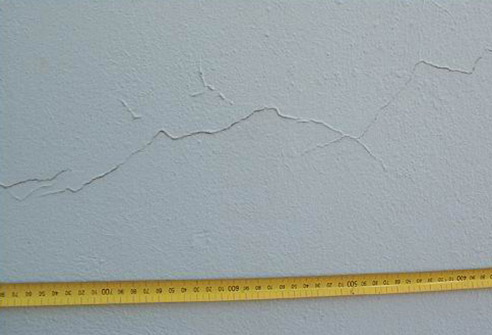
Structural Cracks
Description
Cracks appear in straight vertical or horizontal lines or in stepped diagonal lines. The cracks go through the plaster and are generally wider than 0.5mm.
Read More
Possible diagnosis
- Due to movement of foundations, moisture expansion, drying shrinkage of masonry units or thermal movement of the roof.
Remedy
- Repairing the plaster is ineffective because these cracks originate in the wall and not in the plaster. However, NEO Aurora Filler could provide effective relief if the structure has become stable. Should the structure still move, NEO Repair Paste provides better long term effects due to its elasticity.
- A specialist is required to establish the cause and recommend remedial measures.
- Such measures may include structural alterations which change cracks into movement joints. Visible joints can be hidden by cover strips or sealed with NEO Repair Paste.
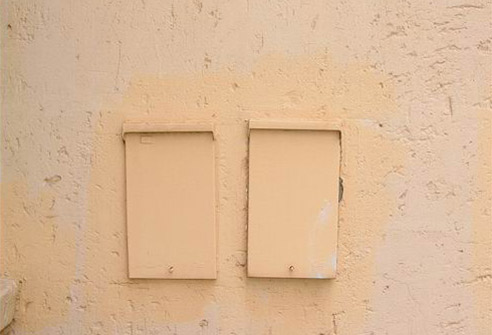
Touch Up Difference
Description
Areas of indifferent colour with signs of application directionality.
Read More
Possible diagnosis
- Touch up with a poor colour matched paint.
- Touch up with the original retained paint while the existing coating has faded.
- The touch up paint has been stored for a prolonged period of time and has degraded or colour developed.
- Different types or batches of paint.
- Using application techniques that differ from the original e.g. touching up with a brush when the original coat was applied by roller.
Remedy
- Colour match before commencing with painting.
- Recoat entire area from edge to edge or corner to corner as required.
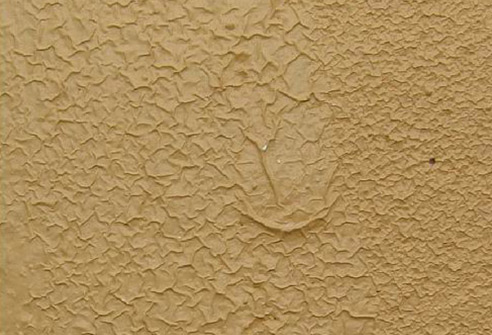
Wrinkling (Part 2)
Description
Wrinkling of water-based coating shortly after application in wet weather. Typical of more flexible sheen coatings. The coating can easily be removed due to a lack of adhesion.
Read More
Possible diagnosis
- Recently painted surfaces that have received moisture pressure from the rear. The flexible, partially cured paint film expands into blisters and then retracts after the water pressure has subsided. The partial contraction results in a wrinkled paint film.
Remedy
- Remove loose and wrinkled paint.
- Remove all sources of moisture ingress.
- Ensure that moisture barriers are in place at ground level, parapets, landings, and window sills etc.
- Allow substrate to dry thoroughly.
- Repaint under the correct weather conditions.
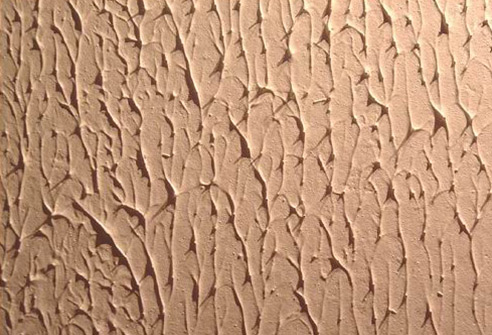
Stipple or Roller Marks
Description
Unwanted textured pattern remaining after using a roller for application.
Read More
Possible diagnosis
- Use of the incorrect roller.
- Use of the wrong type of textured coating.
- Use of the wrong technique and overloading of the roller.
- Low-quality paint with poor flow and leveling properties.
Remedy
- If still wet, brush or roll out to level.
- Dried paint will need to be sanded level and repainted. Make sure that the paint and application technique are now correct.